Choosing the right office storage lockers is not simply a matter of counting doors and comparing prices. The better question is this: how will people use them during a busy workday? A receptionist may need quick access to personal items, while a hybrid employee may require a larger compartment for a laptop bag, coat, and headphones. Locker depth, ventilation, lock reliability, cleanability, and placement all deserve careful attention.
Workplace strategist Peter Bacevice, PhD, offers a useful principle: “Storage is not an afterthought; it shapes how people use a workplace.” That idea matters when evaluating office storage lockers for real environments. A locker beside a crowded doorway may create daily frustration, even if its construction is excellent. A compact unit may save floor space, but it could leave winter coats pressed against equipment. Small details become visible quickly.
Look closely.
This guide will compare locker materials, sizes, locking systems, accessibility features, and maintenance needs. It will also consider shared offices, staff turnover, security expectations, and future expansion. Powder-coated steel may handle heavy use well, while laminate can support a warmer interior design. Digital locks offer convenience, but they still need dependable battery management and administrative control.
There is no perfect locker for every workplace. That is worth admitting. The best choice balances security, user comfort, hygiene, appearance, and long-term value. Before ordering, test sample units with actual users. Their feedback may reveal problems that a product brochure politely ignores.
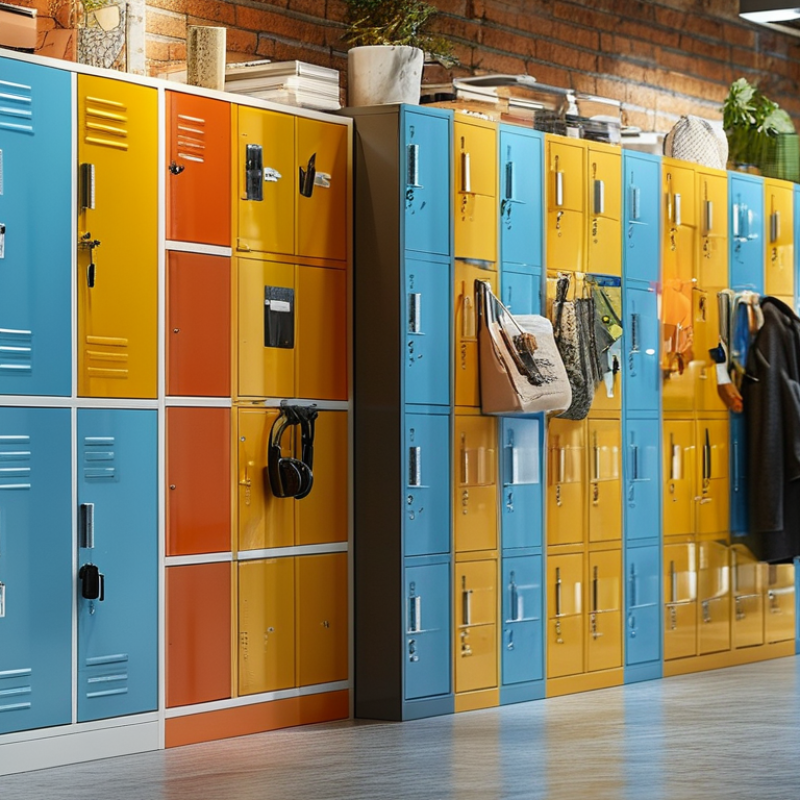
How to Choose the Best Office Storage Lockers?
Office storage lockers serve different routines, not just different floor plans. Personal lockers give employees a secure place for coats, bags, helmets, and small devices. They work well in open-plan offices and shared workspaces. Single-compartment designs suit daily use. Larger compartments help staff who carry equipment.
Team lockers support hot-desking and rotating schedules. Employees can store project files without claiming permanent desks. Mobile lockers add flexibility during office changes, although their wheels need reliable brakes. Lockers with ventilation are useful for uniforms, outdoor clothing, or damp items. In contrast, compact pedestal units keep stationery and documents close to a workstation. I once underestimated door clearance in a narrow corridor. The locker fitted perfectly, but opening it blocked the walkway.
Tips: Measure the full opening area, not only the locker width. Check door swing, corridor space, and nearby furniture. Choose durable surfaces for frequent contact. Smooth edges reduce snagging and simplify cleaning. Label compartments clearly, but avoid displaying sensitive personal details. A dependable lock should match the workplace routine, whether users need keys, codes, or managed access. Ask staff what they actually store. Their answers may challenge the original plan. Include accessible compartments within comfortable reach. Also inspect hinges, vents, and base protection before installation. Small hardware failures become daily frustrations.
Types of office storage lockers and their common uses
The chart compares representative external dimensions commonly found in offices. Personal and wardrobe lockers are suitable for coats, bags, and individual belongings; cube lockers work well for compact personal storage; mobile pedestals fit under desks for daily files and supplies; and lateral filing cabinets provide wider storage for shared documents. Actual dimensions may vary by manufacturer and office layout.
How to Choose the Best Office Storage Lockers?
Key Factors to Consider Before Choosing Office Lockers
Hybrid work changes how much personal storage an office needs. Microsoft’s 2023 Work Trend Index found that 73% of employees wanted flexible remote-work options, while 67% valued in-person connection. This makes daily storage less predictable. Choose lockers that support shared use, not permanent ownership. A practical starting point is one locker for every two or three rotating users. However, your attendance data matters more than any general ratio.
Measure what employees actually carry. A 300–450 mm wide compartment usually holds a laptop bag, coat, and small personal items. Add ventilation for damp jackets and sports equipment. Soft-close doors reduce noise near focused work areas. Electronic locks can simplify shared access, but mechanical locks may be easier to maintain. The right choice depends on your facilities team’s skills.
Safety and accessibility deserve equal attention. Check door clearances, rounded edges, anchoring points, and accessible compartment heights. The International Facility Management Association emphasizes lifecycle cost, not only purchase price, in facility planning. A cheaper locker may create higher replacement and maintenance costs. I have seen attractive units become inconvenient when hinges fail or labels peel. Small details matter. Cleaning access is often overlooked. Specify corrosion-resistant finishes, replaceable parts, and clear numbering. No option is perfect. Review usage after three months, then adjust the layout instead of defending the original plan.
Selecting the right locker begins with measuring real workplace needs, not guessing from a catalogue. Count daily users, shared teams, visitor traffic, and personal equipment. A compact locker may hold a handbag and coat, but not a laptop bag or helmet. For mixed storage, choose varied compartments instead of identical small doors. Measure width, depth, and door swing carefully. A locker can fit the wall yet block a busy walkway.
Layout shapes everyday convenience. Place frequently used lockers near entrances, changing areas, or team zones. Keep taller units against walls and leave comfortable circulation space between rows. Check lighting, ventilation, cleaning access, and nearby power points. Capacity should allow modest growth, perhaps 10 to 15 percent more than today’s demand.
I once underestimated winter coats. That small error made the storage plan feel crowded within weeks.
Tips:
How to Choose the Best Office Storage Lockers?
Locker material affects durability, maintenance, privacy, and workplace comfort. Steel lockers resist daily impacts and support strong, stable doors. However, they can dent and may feel cold in quiet offices. Compact laminate handles moisture well and offers a warmer appearance. Plastic lockers resist rust, but lower-quality panels may flex under pressure.
Security depends on more than a lock. Check door thickness, hinge protection, ventilation openings, and the frame’s resistance to forced movement. A mechanical combination lock needs no batteries and suits shared workplaces. Electronic locks provide audit records and temporary access, but batteries require regular checks. Key locks remain simple and reliable, although lost keys create administrative work. In my experience, poorly aligned doors cause more problems than weak locks. That detail is easy to miss.
Tips: Test several lockers in person. Open each door repeatedly. Feel for movement at the hinges. Ask how access is recovered after a forgotten code or failed battery. Choose powder-coated steel for heavy use, laminate for appearance, and plastic for damp areas. Keep a maintenance record. It may seem excessive, but small faults become frustrating during busy mornings. Also, avoid placing lockers where doors block walkways or emergency equipment. A secure locker should still support safe, practical movement.
| Locker Option | Primary Material | Typical Security Level | Recommended Locking Systems | Durability & Maintenance | Moisture & Corrosion Resistance | Best Use Case | Relative Cost |
|---|---|---|---|---|---|---|---|
| Powder-Coated Steel Locker | Cold-rolled steel with baked powder coating | High; rigid doors and strong frame provide good resistance to forced entry | Key cam lock, combination lock, electronic keypad, or RFID lock | Very durable; wipe-clean surfaces and replaceable lock components | Good indoors; exposed cut edges and damaged coating may rust in damp areas | General offices, employee storage, warehouses, and high-traffic areas | Medium |
| Stainless Steel Locker | Stainless steel sheet metal | High; solid construction supports secure long-term use | Key lock, combination lock, keypad lock, or access-control lock | Excellent durability; easy to sanitize and resistant to many cleaning chemicals | Excellent; suitable for humid environments when the correct stainless grade is specified | Medical, laboratory, food-service, fitness, and coastal facilities | High |
| Phenolic Compact Laminate Locker | High-pressure compact laminate with resin-impregnated layers | Medium to high; secure when fitted with reinforced hinges and quality locks | Cam lock, combination lock, electronic keypad, or RFID lock | Very durable; resists dents, stains, and routine cleaning | Excellent; non-porous panels perform well in humid conditions | Modern offices, changing areas, wellness facilities, and damp interiors | High |
| Plastic or HDPE Locker | High-density polyethylene or molded plastic | Medium; suitable for personal belongings but less resistant to heavy impact than steel | Key lock, combination lock, or electronic lock with protected mounting points | Good; will not dent or rust easily and requires minimal maintenance | Excellent; non-rusting and appropriate for wet or frequently washed areas | Gyms, pool areas, schools, workshops, and humid workplaces | Medium to high |
| Wood-Veneer or MDF Locker | MDF or engineered wood with laminate, paint, or veneer finish | Low to medium; appropriate for controlled-access office storage | Furniture cam lock, mechanical combination lock, or keypad lock | Good in dry interiors; edges and hinges may need periodic inspection | Limited; prolonged moisture can cause swelling or finish damage | Executive offices, reception areas, libraries, and design-focused workplaces | Medium to high |
| Wire-Mesh Locker | Welded steel wire mesh with a protective coating | Medium; provides physical storage security while allowing visibility and ventilation | Padlock hasp, key lock, combination lock, or electronic latch | Good; airflow reduces odor and moisture buildup, but mesh may be vulnerable to cutting tools | Good indoors; coating quality determines resistance in damp locations | Workrooms, equipment storage, industrial offices, and areas requiring visual inspection | Low to medium |
Choosing office lockers starts with workplace behavior, not a catalog photograph. Hybrid teams need day-use compartments near entrances and shared work areas. Dedicated teams may need larger units for shoes, helmets, and personal equipment. Measure peak occupancy for two weeks before ordering. Two weeks matter. This simple step prevents an attractive, undersized installation.
Steelcase’s 2021 Global Report found that 87% of employees wanted flexibility in where and when they worked. That shift makes shared lockers practical, but only when access is simple. Use digital or combination locks for temporary users. Use assigned lockers for employees carrying equipment daily. Avoid placing lockers beside quiet rooms, where door noise can interrupt concentration.
Design should support the building’s visual language. Slim vertical units suit narrow corridors. Wider compartments handle backpacks and protective clothing better. Ventilated doors help damp items dry, but they may reduce visual privacy. Recycled-content steel and replaceable locks can improve lifecycle value.
Do not overdesign. A pilot installation may reveal problems that drawings miss, such as blocked walkways or poor lighting. Local accessibility requirements should be checked with qualified professionals before installation. No layout is perfect.