What Are the Best Types of Training Room Tables?
Training rooms are not just places to park chairs and open laptops. Their layouts shape movement, visibility, collaboration, and how quickly a room can change between activities. Training magazine’s 2024 Training Industry Report estimated that U.S. organizations spent $102.8 billion on training during 2024. That figure reflects substantial investment in workforce learning, though it does not prove that any particular table improves results. It does make the room itself worth planning carefully.
The best training room tables depend on how people use the space. Classroom-style tables support note-taking and forward-facing instruction. Flip-top tables can help teams clear the floor between sessions. Trapezoid and modular tables make small-group work easier, while sturdy rectangular tables often suit equipment-heavy training. Details matter: locking casters, cable access, rounded edges, and enough knee room can change how a setup feels after several hours. Small things.
There is no universal winner. A compact folding table may be practical in a shared room, yet feel unstable during intensive computer work. A wide table can offer welcome workspace, but narrow aisles may make the room awkward to navigate. This guide compares common training room tables by flexibility, durability, comfort, and room footprint. It also considers a detail that is easy to overlook: the best-looking floor plan may not be the easiest one to use. A quick room test, with chairs pulled out and equipment in place, can reveal problems a catalog photo misses.
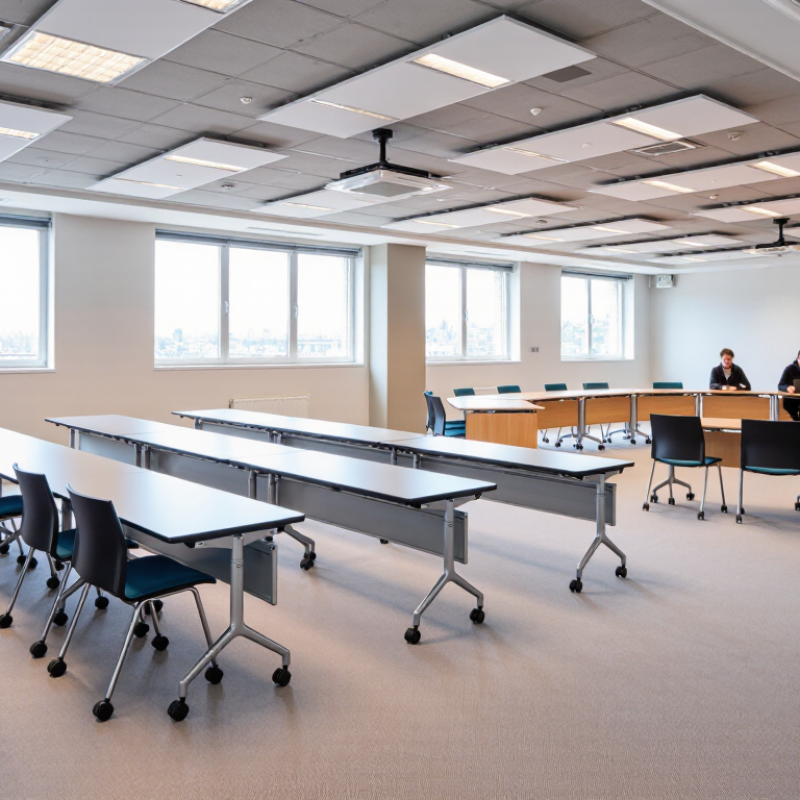
Understanding the Main Types of Training Room Tables
What Are the Best Types of Training Room Tables?
Understanding the Main Types of Training Room Tables
Training room tables shape how people learn, share materials, and move through a space. The best choice depends on class size, room dimensions, and the activities planned. Measure the room with chairs pulled out, not just the tabletop footprint. A layout can look tidy on paper and still feel cramped in use.
Rectangular tables are a familiar, flexible option. They suit rows, paired work, and conference-style sessions, while their straight edges make efficient use of narrow rooms. Trapezoid tables can be grouped into circles, arcs, or larger work surfaces. They support collaboration, though their angled edges may leave awkward gaps in some layouts. Half-round tables work well along walls or at the ends of rows, where a curved edge gives participants more room to turn toward a presenter.
Flip-top and nesting tables are useful when rooms need frequent changes. Their tops fold or tables stack together, making storage and floor cleaning easier. That convenience has a trade-off: check the locking mechanisms and whether stored units fit through doorways. Round tables encourage face-to-face discussion, but they can take up more floor space than expected. Even small details matter. A power outlet near one table may not reach a laptop across the room.
What Are the Best Types of Training Room Tables?
Typical Seating Capacity by Table Type
These approximate planning figures show how many people a table may seat comfortably in a training setup. Actual capacity varies with table dimensions, chair spacing, and room layout. Rectangular tables suit rows, while trapezoid and half-round tables can be combined into collaborative layouts; round tables encourage group discussion.
Comparing Table Shapes and Their Training Uses
Table shape affects sightlines, movement, and how easily trainees share materials.
Rectangular tables suit instructor-led sessions, software demonstrations, and note-taking. Rows create clear forward views, while their straight edges make laptop and worksheet layouts simple. The trade-off is real: people at the back may feel distant, and discussion can become one-way. A narrow room can also leave little space between chairs.
U-shaped tables keep the facilitator visible while giving participants room to speak across the open center. They work well for small workshops, coaching, and group demonstrations, though they use floor space quickly. Round tables encourage conversation and peer exercises; place a sample kit or printed task in the middle, and everyone can reach it. But a central object can block sightlines, and some seats may face away from a screen. Boat-shaped tables, wider in the middle, can improve screen visibility while preserving a familiar row arrangement. Measure chair clearance with people seated, not just the empty room. That detail is easy to miss. No shape fixes poor acoustics or cramped spacing, and I would not assume one layout fits every session. A quick room trial often reveals awkward turning or blocked walkways.
Evaluating Materials, Mobility, and Space Requirements
What Are the Best Types of Training Room Tables?
Evaluating Materials, Mobility, and Space Requirements
A table’s material affects its durability, weight, and upkeep. Laminate tops are practical for frequent use and clean easily after marker or coffee spills. Solid wood can feel warmer, but it is heavier and may show scratches. Metal frames generally handle daily movement well. Check the joints and edges, not just the surface. Small details matter.
Mobility and room layout should guide the table shape. Locking casters help staff rearrange tables, but wheels need to stay put during note-taking. Folding tables store neatly, though some can wobble under heavy equipment. Measure the room with chairs pulled out; a clear aisle on paper may disappear once people sit down. I’d leave more space than seems necessary. Rooms change.
Tips: Mark table footprints on the floor with removable tape before ordering. Test one table with chairs, laptops, and a walking route. For narrow rooms, try slim rectangular tables; for group discussion, modular shapes can be easier to reconfigure. Don’t overlook power access. A beautiful layout is less useful when cables cross walkways.
Matching Table Configurations to Training Activities
Training room tables work best when their layout reflects the task. For instructor-led sessions, rows facing the screen give most learners a clear view and leave space for note-taking. Keep a central aisle open so people can enter or move without squeezing past chairs. For hands-on demonstrations, angle tables toward the work surface and leave room for the trainer to circulate.
Sightlines matter.
Small-group activities need a different setup. Clusters of four or six let participants share worksheets, compare samples, and talk without raising their voices. Round tables can make discussion feel more balanced, though they may use floor space less efficiently. For discussion with a presenter, a U-shaped layout keeps faces visible and gives the instructor access to each group.
It can also leave fewer seats than expected. Check before booking.
Flexible tables on locking casters help rooms switch between lectures and teamwork, but movement alone does not make a layout effective. Test the plan with the actual chairs, laptops, and materials. Measure clearances, and check where power outlets sit; a table cluster can look tidy while leaving cords across a walkway.
Small detail. The best configuration may still need adjustment once people start working.