
Skip to content

Top 10 BPA Free Feeding Bottles for Global Buyers

Choosing a feeding bottle bpa free product is not simply a matter of reading one reassuring label. Global buyers must examine materials, testing records, supplier transparency, and everyday usability. A bottle may claim BPA-free status, yet still require closer attention to nipples, caps, valves, and printed components. These small parts touch milk, warm water, and infant mouths repeatedly.

Dr. Leonardo Trasande, a pediatric environmental-health researcher, has stated, “BPA is a hormone-disrupting chemical that can affect human health.” His warning supports a careful purchasing approach. Buyers should request current laboratory reports, food-contact compliance documents, and clear material declarations. Independent testing is more convincing than marketing language alone. Traceable manufacturing matters.

No bottle is perfect. That deserves honesty.

This guide introduces ten BPA-free feeding bottles for international buyers, with attention to safety claims, design, cleaning, durability, and supply consistency. Some models use polypropylene, silicone, glass, or mixed materials. Each option has trade-offs. Glass can resist odors but may break during transport. Silicone feels soft, yet its firmness and flow rate vary. Polypropylene is lightweight, although repeated heating can affect appearance and performance.

Real-world handling also matters. A caregiver may wash the bottle at midnight, drop the cap, or measure formula under weak lighting. Small design flaws become important then. We will compare practical details, not just attractive packaging. Buyers should still confirm local requirements before importing or selling. Product claims can change. Testing documents can expire. Careful review remains necessary.
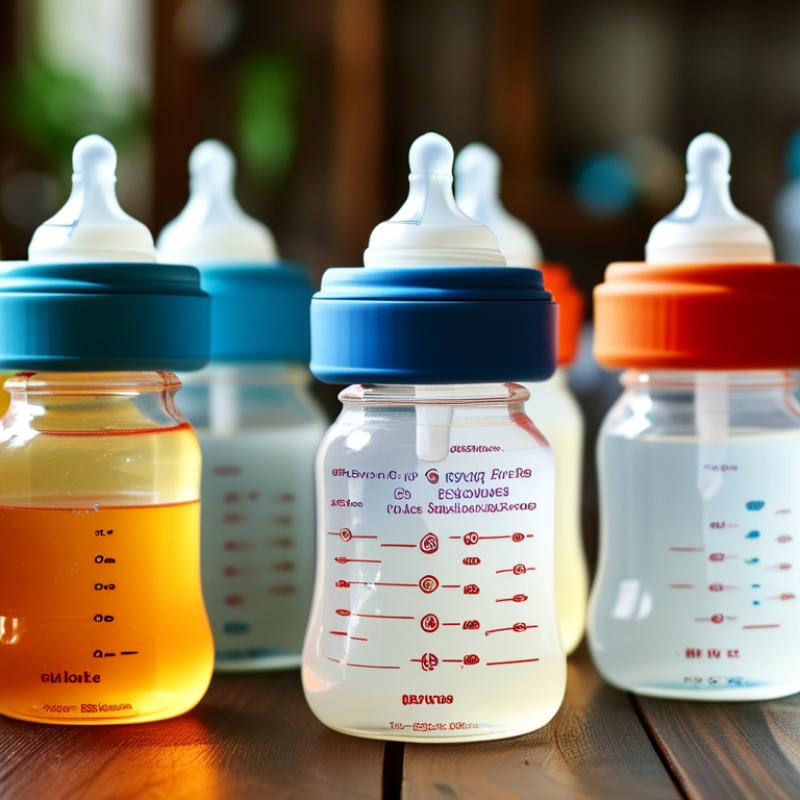
Top 10 BPA Free Feeding Bottles for Global Buyers

What BPA-Free Feeding Bottles Are and Why They Matter

What BPA-Free Feeding Bottles Are and Why They Matter

BPA-free feeding bottles are designed without bisphenol A, a chemical historically used in some rigid plastics. BPA can migrate into food or drinks, especially when containers are heated, scratched, or poorly maintained. Research has raised concerns about its possible effects on hormone-related systems. For infants, reducing avoidable exposure is a sensible purchasing decision.

The label alone is not enough. Reliable suppliers should identify the bottle material, production location, testing standards, and recommended temperature range. Common alternatives include glass, silicone, polypropylene, and stainless steel. Each has practical strengths. Glass resists odors but can break. Silicone feels soft but may hold milk residue if cleaning is rushed. Plastic is lighter, yet repeated heating can shorten its useful life.

Pay attention to details.

Check the nipple, cap, seals, and printed markings. They should remain intact after washing. A cloudy surface, deep scratch, sticky smell, or loose seal deserves attention. Never assume BPA-free means chemical-free or automatically safer in every situation. Proper sterilization, clean hands, correct storage, and timely replacement still matter. One buying mistake is choosing a bottle only because it says “BPA-free.” I have seen product descriptions omit heat limits and material details. That gap makes comparison harder, especially for global buyers. Ask for clear documentation before placing a large order.

Key Materials and Safety Standards for Global Buyers

When sourcing BPA-free feeding bottles, global buyers should examine the full material system, not just the label. Polypropylene is lightweight and commonly used for bottle bodies. Glass offers a stable surface and easy cleaning, but it can break. Food-grade silicone is widely used for nipples and seals because it remains flexible during repeated use. Stainless steel can be durable, although buyers should check its internal coating and weld quality.

BPA-free does not mean risk-free. Ask suppliers for clear material specifications, batch traceability, and recent laboratory reports. Testing should cover overall migration, specific migration, heavy metals, phthalates, and related bisphenols where required. For plastic parts, buyers may review compliance with applicable food-contact rules, such as EU Regulation 1935/2004 and Regulation 10/2011, or relevant United States requirements under 21 CFR. Standards differ by destination.

Check the details. A credible report should identify the tested material, method, laboratory, and production batch. It should also match the final bottle design, including nipples, valves, inks, and adhesives. Packaging claims can be vague. That is a problem. Practical inspections should include odor, leakage, deformation after heating, and cleaning instructions. No material is perfect. Glass may crack during shipping, while silicone can retain odors if poorly formulated. Buyers should balance safety evidence, user handling, temperature exposure, and supplier transparency before placing a large order.

Top 10 BPA Free Feeding Bottles for Global Buyers - Key Materials and Safety Standards for Global Buyers

Rank Bottle Type Primary Materials Typical Capacity BPA-Free Basis Relevant Safety References Typical Thermal Guidance Key Checks for Global Buyers
1 Borosilicate Glass Bottle Borosilicate glass body, food-grade silicone nipple and sealing ring 120–270 mL Glass does not contain BPA; silicone components should have a finished-product declaration. EN 14350; EU Regulation No. 1935/2004; EU Regulation No. 10/2011 may apply to plastic parts. Excellent heat resistance; avoid sudden thermal shock and inspect for chips or cracks. Check impact protection, thermal-shock instructions, nipple flow rate and replacement-part availability.
2 Stainless Steel Bottle Food-contact stainless steel, usually grade 304 or 316; silicone nipple and gasket 150–330 mL Stainless steel is BPA-free by composition; all polymer components require separate verification. EN 14350; EU Regulation No. 1935/2004; applicable national food-contact rules. Good temperature durability; confirm whether the cap, liner and seals are dishwasher-safe. Verify steel grade, migration testing, weld quality, corrosion resistance and vacuum-insulation claims.
3 Polypropylene Bottle Food-contact polypropylene body, silicone nipple and elastomer sealing parts 120–330 mL Polypropylene is commonly manufactured without BPA; finished-product testing remains necessary. U.S. FDA 21 CFR 177.1520; EU Regulation No. 10/2011; EN 14350. Generally suitable for warm liquids; follow the supplier’s sterilization temperature and time limits. Request food-contact declaration, overall and specific migration reports, odor testing and repeated-sterilization data.
4 Glass Bottle with Protective Sleeve Tempered or borosilicate glass, silicone sleeve, silicone nipple and polypropylene cap 120–240 mL The glass body contains no BPA; sleeve, cap and nipple materials must be documented. EN 14350; EU Regulation No. 1935/2004; EU Regulation No. 10/2011 for plastic parts. Good heat tolerance; the sleeve reduces handling risk but does not make glass unbreakable. Check sleeve fit, glass-impact testing, visible-volume markings and compatibility with sterilizers.
5 Wide-Neck Polypropylene Bottle Polypropylene body, wide silicone nipple, polypropylene collar and silicone gasket 150–330 mL The bottle body is typically BPA-free polypropylene; confirm the full assembled product. U.S. FDA 21 CFR 177.1520; EU Regulation No. 10/2011; EN 14350. Suitable for routine warm feeding; high-temperature use depends on the sterilization instructions. Evaluate leak resistance, thread tolerances, nipple attachment, anti-colic valve design and cleaning access.
6 PPSU Bottle Polyphenylsulfone body, silicone nipple and polypropylene or PPSU closure parts 160–300 mL PPSU is a BPA-free engineering thermoplastic; verify the resin grade and finished-product compliance. EU Regulation No. 10/2011; EN 14350; U.S. FDA food-contact authorization should be confirmed for the specific grade. High heat resistance and repeated-sterilization capability when supported by supplier instructions. Request resin traceability, sterilization-cycle validation, colorant compliance and migration reports.
7 Silicone Squeeze Bottle Food-grade silicone body and nipple, with polypropylene or stainless-steel closure components 150–240 mL Silicone does not use BPA as a base material; additives, pigments and attached parts must be assessed. U.S. FDA 21 CFR 177.2600 for applicable rubber articles; EN 14350; EU food-contact requirements. Flexible and heat-resistant; follow limits for boiling, steam sterilization and microwave use. Check compression recovery, odor, tear resistance, pigment migration and dimensional stability.
8 Copolyester Bottle BPA-free food-contact copolyester body, silicone nipple and polypropylene closure 150–300 mL Some copolyesters are formulated without BPA; the exact resin and additives must be identified. Applicable FDA food-contact authorization; EU Regulation No. 10/2011; EN 14350. Good clarity and impact resistance; maximum temperature varies substantially by resin grade. Obtain resin identification, BPA and bisphenol screening, migration testing and dishwasher guidance.
9 Anti-Colic Polypropylene Bottle Polypropylene bottle, silicone nipple, silicone valve and polypropylene venting components 120–270 mL Polypropylene and silicone can be BPA-free, but each valve, seal and colorant requires verification. U.S. FDA 21 CFR 177.1520; EU Regulation No. 10/2011; EN 14350. Normal warm-liquid use; complex vent systems require careful compliance with cleaning and sterilization limits. Check valve accessibility, leakage under pressure, spare-part compatibility and cleaning validation.
10 Convertible Feeding Bottle Glass, stainless steel or polypropylene body with interchangeable silicone nipples and training-cup parts 150–330 mL BPA-free status depends on every interchangeable component, not only the main bottle body. EN 14350; EU Regulation No. 1935/2004; EU Regulation No. 10/2011 for plastic components. Thermal performance depends on the selected body material and the weakest component in the set. Confirm component interchangeability, age grading, choking-risk assessment, spare parts and multilingual instructions.

Buyer note: “BPA-free” is a material or product claim, not a universal safety certification. For international procurement, request the bill of materials, food-contact declaration, migration-test reports, BPA and bisphenol screening, sterilization instructions, batch traceability and market-specific compliance documents. Applicable requirements vary by destination market and product configuration.

How to Evaluate the Top 10 Feeding Bottles

To evaluate the top ten feeding bottles, use the same checklist for every model. Do not rely on “BPA-free” wording alone. Ask suppliers for material declarations, batch traceability, and recent independent laboratory reports. Check whether each report identifies the bottle, nipple, and closure separately. Documents should match the actual product, not a similar sample. That detail is easy to miss.

Next, inspect daily performance. Fill each bottle with warm water, close it firmly, and place it sideways for ten minutes. Look for leaks around the collar and cap. Test the nipple flow with gentle pressure. A steady flow matters more than a clever shape. Check the grip with wet hands, because smooth surfaces can become difficult during night feeding. Examine seams, threads, and corners where milk residue may remain. Wash several parts by hand and in the intended cleaning method. Some designs seem simple but take too long to clean.

Score each bottle for safety evidence, leak resistance, feeding comfort, cleaning effort, durability, and supplier support. Give higher scores to clear instructions and consistent replacement-part availability. Ask about minimum order quantities, packaging protection, and inspection procedures before shipment. A spreadsheet helps, but it can create false confidence. Real use may reveal a weak cap or an awkward nipple. Recheck the lowest-scoring models with the same test conditions. A perfect ranking is unlikely.

Features, Designs, and Age-Specific Buying Considerations

Choosing a BPA-free feeding bottle requires more than checking one label. Look for food-grade materials, clear safety testing, and complete care instructions. Silicone nipples should feel flexible, but not collapse during feeding. A secure cap helps prevent leaks in travel bags. Wide-neck designs are easier to clean, although they may need more storage space. Anti-colic vents can reduce swallowed air, but results differ between infants. BPA-free does not mean risk-free in every situation.

Age matters, but development matters more. Newborns often need slow-flow nipples and soft, breast-like shapes. Around three to six months, some babies manage medium flow better. Older infants may prefer bottles with handles or training spouts. Avoid increasing flow too quickly. Coughing, gulping, or milk leaking from the mouth can signal poor flow control. Graduated markings are useful, especially when preparing measured feeds across different countries. However, printed markings may fade after repeated sterilization.

Tips: Check the nipple after every use. Replace it when you notice cracks, stickiness, thinning, or changed texture. Choose parts that are easy to find locally. A bottle is less practical when one missing valve makes it unusable. Wash narrow vents with a small brush. I once underestimated cleaning time; complicated designs often look impressive but demand more daily effort. Always follow the manufacturer’s temperature and sterilization guidance.

International Sourcing, Compliance, and Supplier Evaluation

Top 10 BPA Free Feeding Bottles for Global Buyers

International sourcing starts with evidence, not attractive product photos. Ask suppliers for recent BPA test reports, food-contact declarations, and material specifications for bottles, nipples, caps, and seals. Testing should identify the laboratory, sample code, method, and production date. Requirements differ across markets, so confirm current rules with qualified compliance professionals before shipment. A bottle marked “BPA-free” may still require wider chemical migration checks. That distinction matters.

Evaluate suppliers through samples and factory records. Compare wall thickness, nipple flow, odor, leakage, and measurement markings after repeated washing. Request batch traceability and a written change-control process. A supplier may pass one audit, then change resin or packaging without clear notice. Factory audits help, but they do not replace independent testing. Review production capacity, minimum order quantities, lead times, defect rates, and corrective-action history. Visit the facility when practical. Photos can hide process gaps.

Tips: Send a signed specification sheet before sampling. Keep sealed samples from each approved batch. Ask who owns the test report. Check whether the report covers the exact model and materials. No checklist is perfect. Leave room for professional judgment, especially when pricing pressures encourage rushed approval.