
Skip to content

How to Choose the Best Aluminum Porch Railing in 2026?

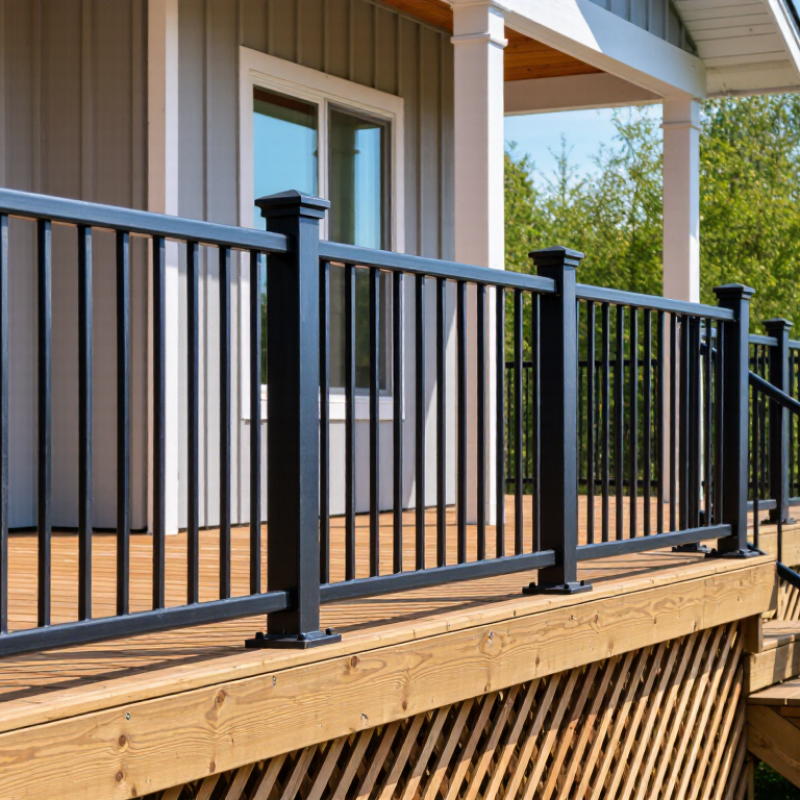
Choosing the right Aluminum Porch Railing in 2026 means balancing safety, durability, appearance, and installation needs. A sleek black rail may look ideal online, but its finish, post spacing, and mounting system matter more once it meets your porch. Measure the railing run, note corners and stair slopes, and check what surfaces can support the posts. Small details count.

Aluminum resists corrosion and is generally lighter than steel, but it is not maintenance-free. Scratches or damaged coatings can affect how it ages, especially in wet or coastal conditions. Compare powder-coat finishes, warranty terms, and product specifications rather than relying on photos alone. Ask whether the rail system is designed for your layout, and confirm its tested load information and applicable local building requirements with the supplier or a qualified installer. A railing that fits a straight porch may need different components for steps or uneven decking.

Budget matters, but the cheapest kit may not include the brackets, gates, or stair parts your project requires. Check replacement-part availability, too. These choices are easy to overlook. A careful comparison can help you choose a railing that feels secure, suits your home, and remains practical to maintain. Still, no checklist catches every odd corner or aging porch board; inspect the actual site before ordering.
How to Choose the Best Aluminum Porch Railing in 2026?

Define Porch Exposure and Use Before Comparing Aluminum Railing Systems

Before comparing aluminum porch railing systems, map the porch’s actual exposure. A covered entry in a dry inland town faces different demands than an open seaside deck. Note salt spray, wind direction, driving rain, freeze-thaw cycles, and hours of direct sun. Salt air is relentless. Also record how people use the space: children leaning on rails, pets pressing against infill, furniture moving past corners, or frequent hand contact. These details affect finish durability, infill choice, post spacing, and maintenance access.

NOAA’s 2022 Sea Level Rise Technical Report projects about 10–12 inches of U.S. coastal sea-level rise by 2050, compared with 2000 levels. That is a national average, not a porch-specific forecast, but it highlights future saltwater and flooding exposure near coasts.

For wind, check local design criteria and the project’s exposure category before choosing posts or attachment hardware. Appearance alone says little about load capacity. Request documented structural ratings and installation requirements, then confirm the porch framing can support them.

After rain, note pooling water, coating scratches, loose fasteners, and where runoff hits the lower rail. It sounds fussy. It helps. Powder-coated finishes can still be damaged, and aluminum components are not automatically maintenance-free.

I would compare systems only after this check. Honestly, that order can feel slower, but it may prevent choosing a beautiful profile that performs poorly in its actual setting.

Check Local Guard Codes: IRC Commonly Requires 36-in Height and 4-in Openings

How to Choose the Best Aluminum Porch Railing in 2026?

Before comparing finishes or baluster styles, check the guard requirements adopted by your local building department. The IRC commonly calls for a 36-inch guard height on many residential porch and deck surfaces, with openings that prevent a 4-inch sphere from passing through. These are common benchmarks, not universal rules. Local amendments, building height, and whether the railing borders stairs can change what applies. Measure from the finished walking surface, not an unfinished frame.

Tips: Ask the building department which code edition applies. Bring a simple porch sketch and note the walking-surface height above grade. Check the space between balusters and beneath the bottom rail; both matter. A tape measure helps. So does a second check.

Once the dimensions are clear, choose an aluminum system with posts and fasteners suited to your porch structure and exposure. Salt air and frequent rain make corrosion-resistant finishes especially useful. Confirm that posts can be securely attached to the framing, rather than only to thin decking. A sleek sample may look sturdy, but appearance alone cannot confirm load performance. Read the installation details, and ask a qualified local professional if the attachment or code requirements are unclear. I’d rather recheck a measurement than discover a small gap fails inspection.

Specify ASTM B221 Aluminum Extrusions and an AAMA 2604-Grade Finish

For a porch railing, specify the aluminum before comparing colors. ASTM B221 covers aluminum-alloy extruded profiles and sets requirements for composition, mechanical properties, and dimensions. Ask for the alloy, temper, and test documentation, not merely “heavy-duty aluminum.” These details affect how posts resist bending and how rails fit at corners. Small gaps matter.

Then name the finish standard: AAMA 2604. Its qualification program includes five-year outdoor exposure in South Florida, a demanding environment for color and coating durability. That is a test benchmark, not a promise that every railing will look new for five years. AAMA testing also evaluates properties such as weathering and corrosion resistance. Request documentation showing the actual coating system meets the standard; a color sample alone proves little. Coastal salt, shade, and sprinkler overspray can still change maintenance needs.

Check cut ends, fasteners, and drainage during installation. A strong coating cannot protect bare edges or water trapped inside a post. Keep dissimilar metals separated where practical, and confirm that the supplier’s installation details suit your site. One detail is easy to overlook: the standard does not replace a project-specific structural check for span, post spacing, or local wind loads. Ask for those calculations too. I would not choose by finish sheen alone. It looks convincing, but it tells you very little.

Compare Structural Ratings Against IBC Benchmarks: 200-lb Point and 50-plf Loads

When comparing aluminum porch railings, look beyond the profile and finish. Ask for engineering data showing how the complete assembly performs against the IBC guard benchmarks: a 200-pound concentrated load at the top rail and a 50-pound-per-linear-foot uniform load. These loads are generally evaluated separately, not added together. Local codes and amendments may differ, so confirm the requirements with your building official.

Check what the rating actually covers. A rail tested with short post spacing may not perform the same way with wider spans, and strong rails can still fail at weak connections. That gap matters. Review the specified post spacing, fasteners, bracket details, and approved supporting structure. For a porch with wood framing, inspect whether the drawings call for attachment into structural members rather than trim boards. Keep the test report or stamped calculations, and verify that your planned layout matches them.

Installation details count. A loose anchor, uneven post, or cut component can change how loads travel through the railing. I would measure the actual span before ordering; estimating from a porch photo is tempting, but unreliable. If the documentation is unclear about load direction, substrate, or configuration, ask a qualified professional to review it before installation.

Choose Infill, Posts, and Mounting Details to Fit Your Porch and Local Code

For a secure aluminum porch railing, choose the infill before setting post spacing. Vertical balusters suit a traditional porch and are easy to inspect. Glass panels preserve the view but need regular cleaning. Cable can look light and open, yet local rules may limit openings or require different spacing. Measure the clear gaps, not just the distance between posts. Small details matter.

Posts need solid backing. On a wood porch, fasten through the decking into structural framing or installed blocking; deck boards alone are not reliable support. For concrete, confirm anchor type, embedment, and edge distance with the railing’s engineering documents. The 2024 International Residential Code, Section R312, generally calls for guards where a walking surface is more than 30 inches above grade, with specific height and opening limits. Local amendments can differ. Check before ordering.

Mounting details affect both safety and appearance. A surface-mounted post saves space, while a fascia-mounted post may preserve walking room but needs suitable rim framing. Use compatible fasteners, especially where dissimilar metals could contact. The Aluminum Association’s report, Aluminum: The Element of Sustainability, notes that about 75% of aluminum ever produced remains in use. That supports aluminum’s long service potential, not a guarantee for every installation. I would still verify the load requirements. Even a neat railing can fail at its connections.

How to Choose the Best Aluminum Porch Railing in 2026

Typical minimum guard-height benchmarks for choosing porch posts, infill, and mounting details.

The IRC commonly uses a 36-inch minimum guard height for one- and two-family dwellings, while the IBC commonly uses 42 inches. Confirm the adopted code edition and local amendments before selecting railing height, infill, post spacing, or surface- and fascia-mount hardware.