
Skip to content

China Best Smart Switch Cover Glass Manufacturer?

Choosing China’s best smart switch cover glass manufacturer requires more than comparing prices or polished catalogs. The real test appears under daily pressure: fingerprints, warm rooms, repeated taps, and accidental impacts.

A reliable supplier should control glass composition, CNC cutting, chemical strengthening, printing, coating, and final inspection. These steps shape clarity, touch response, edge safety, and long-term appearance. Buyers should also review sample consistency, flatness data, coating adhesion, and traceable quality records. Details matter.

Dr. Lin Wei, an independent glass-materials consultant, offers a practical view: “A smart switch cover glass is successful only when beauty survives repeated human contact.” This principle supports a careful manufacturer evaluation. The strongest factories usually combine automated inspection with experienced technicians. They can adjust ink thickness, corner radius, and surface treatment for different switch designs.

However, no supplier is perfect. A factory may deliver excellent prototypes yet struggle with mass-production consistency. Another may offer low prices but limited testing evidence. That weakness should not be hidden. It deserves direct questions, factory audits, and independent sample checks.

This guide examines China-based manufacturers through material performance, production capability, customization, certification support, packaging, and service reliability. It also considers practical details, such as whether black borders remain even after strengthening and whether drilled openings align with internal components. A good smart switch cover glass manufacturer should not merely sell attractive panels. It should provide stable performance, clear communication, and measurable quality from the first sample to every production batch.
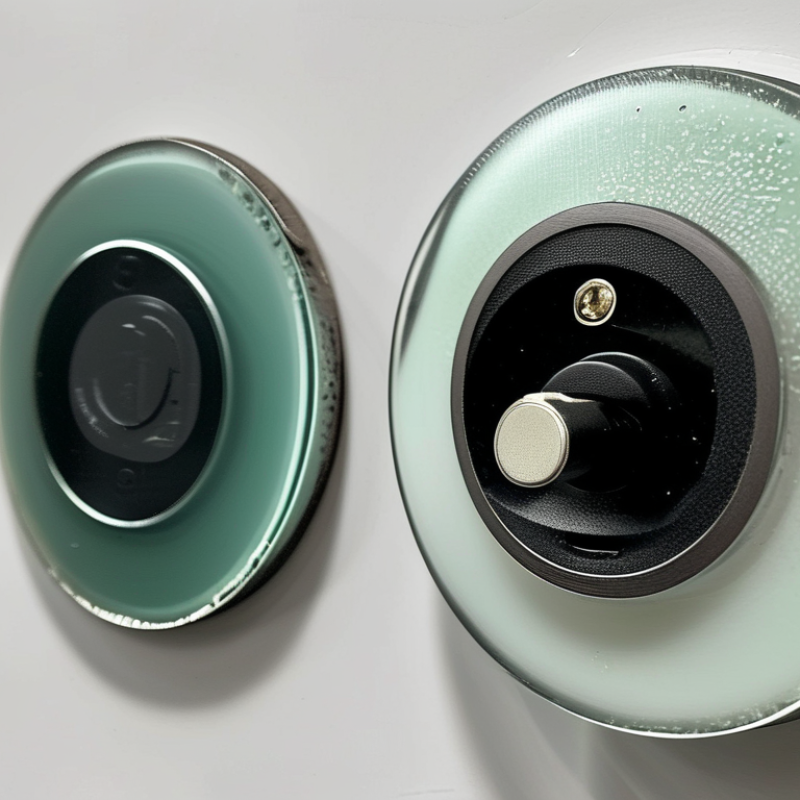
China Best Smart Switch Cover Glass Manufacturer?

What Is Smart Switch Cover Glass?

Smart switch cover glass is the protective, touch-sensitive surface placed over a modern wall switch. It may look simple, but its design combines glass engineering, optical clarity, and user comfort. The panel shields internal electronics from fingerprints, dust, and everyday impacts. It also allows light symbols or control icons to remain visible. Many products use chemically strengthened glass for better resistance against scratches and edge damage. A smooth surface improves cleaning and touch response. Dark printing, transparent windows, and precise openings can be added during processing. Small errors matter. A slightly misplaced symbol can make the whole switch feel poorly made.

In practical production, engineers usually check thickness, flatness, color consistency, surface haze, and hole dimensions. They also test repeated touch operation and inspect the glass under controlled lighting. Anti-fingerprint coatings can reduce oily marks, although they may wear over time. Adhesive selection is equally important because weak bonding can create bubbles or edge lifting. The best specification depends on the switch structure, installation environment, and expected usage. A glass panel for a dry bedroom may need different protection than one used near a kitchen sink. No process is flawless. Even a strong cover can fail when sharp edges, poor packaging, or excessive assembly pressure are ignored. Reliable manufacturers therefore combine material testing, controlled processing, and honest inspection records.

Key Materials and Technologies Used in Smart Switch Cover Glass

China Best Smart Switch Cover Glass Manufacturer?

Smart switch cover glass combines protection, touch sensitivity, and visual design. Aluminosilicate glass is often selected for its strength and thin profile. Low-iron glass can improve light transmission and create a cleaner appearance. Chemical strengthening uses ion exchange to improve surface durability and edge performance.

The glass thickness must match the touch sensor and switch structure. Excessive thickness may reduce capacitive sensitivity. Very thin glass may increase breakage risk during installation. CNC shaping creates accurate openings and rounded edges. Laser processing can support fine details, but poor control may leave stress around the edges. Ceramic ink printing provides durable symbols and borders. Optical bonding with clear adhesive can reduce internal reflections and improve readability.

Surface coatings matter in daily use. Anti-fingerprint layers reduce oily marks, while anti-reflective coatings help under strong ceiling lights. However, coatings can wear faster when cleaning methods are unsuitable. I have found that inspection should include haze, transmittance, flatness, edge strength, and touch response. No process is perfect. Small edge defects deserve serious review.

Tips: Ask for samples before mass production. Test touch response through the final glass thickness. Check coating adhesion after repeated cleaning. Confirm color consistency under warm and cool lighting. Do not judge quality from appearance alone.

China Best Smart Switch Cover Glass Manufacturer? - Key Materials and Technologies Used in Smart Switch Cover Glass

Material or Technology Typical Composition or Specification Key Performance Data Main Manufacturing Process Functional Benefit Typical Smart-Switch Application
Aluminosilicate Glass Silica-based glass containing aluminum oxide and alkali oxides; commonly supplied in thin sheets from approximately 0.55 to 2.0 mm. High surface hardness; good resistance to thermal shock and mechanical impact compared with standard soda-lime glass. Glass melting, sheet forming, precision cutting, edge grinding, chemical strengthening, and surface finishing. Provides a strong, thin, and visually clear cover for touch-sensitive control panels. Premium touch switches
Soda-Lime Glass Common architectural and electronic glass based mainly on silica, sodium oxide, and calcium oxide; frequently used from 1.5 to 4.0 mm. Typical Vickers hardness is approximately 5 to 6 GPa; economical and widely available, but less impact-resistant than chemically strengthened aluminosilicate glass. Float-glass production, CNC cutting, edge processing, tempering or chemical strengthening, and decorative printing. Offers a cost-effective rigid surface with good optical clarity and dimensional stability. Standard wall switches
Chemical Strengthening Ion-exchange treatment in which smaller sodium ions near the glass surface are replaced by larger potassium ions. Creates a surface compressive stress layer; typical depth ranges from several tens to several hundred micrometres, depending on glass composition and treatment time. Cleaning, immersion in molten potassium salt, controlled temperature treatment, rinsing, and inspection. Improves resistance to scratches, edge damage, and bending or impact-related breakage without significantly increasing thickness. Thin touch cover glass
Thermal Tempering Heat treatment followed by rapid, controlled air cooling to create compressive stress at the surface. Safety glass generally has greater bending and impact resistance than annealed glass; breakage produces relatively small granular fragments. Heating the glass close to its softening range, rapid air quenching, and flatness and fragmentation inspection. Enhances mechanical strength and improves safety in the event of breakage. Thicker glass panels
Anti-Fingerprint Coating Oleophobic and hydrophobic thin-film coating, often based on fluorinated or low-surface-energy materials. Reduces adhesion of skin oils and water; performance is typically evaluated by contact angle, stain resistance, and repeated-wipe durability. Plasma or solvent cleaning, vacuum deposition or wet coating, curing, and oleophobicity testing. Keeps the switch surface cleaner and improves touch comfort and visual appearance. Frequently touched controls
Anti-Glare Surface Microscopic etched or coated surface that diffuses reflected light. Can lower perceived glare and improve readability under strong indoor lighting; haze is adjusted according to display and design requirements. Chemical etching, micro-texturing, or application of a diffusive coating followed by cleaning and optical inspection. Improves legibility and reduces distracting reflections from lamps and windows. Display-integrated switches
Anti-Reflective Coating One or more dielectric thin-film layers designed to reduce reflected visible light through optical interference. Can reduce front-surface reflectance when the coating structure and incident light angle are properly controlled. Ion-assisted deposition, magnetron sputtering, or evaporation with multilayer thickness control. Improves contrast and visibility of icons, indicators, and displays behind the glass. High-contrast touch panels
Black Ceramic Ink Inorganic pigment and glass-frit ink printed on the rear surface of the cover glass. Provides opaque masking and stable color after firing; ceramic inks typically withstand elevated firing temperatures better than organic inks. Screen printing, drying, high-temperature firing, registration inspection, and color evaluation. Hides wiring and adhesive areas while creating a clean border and defined graphic layout. Black border and icon masking
Digital Ceramic Printing Computer-controlled deposition of ceramic or UV-curable ink for variable graphics, symbols, and decorative patterns. Supports rapid design changes and multi-color graphics; final durability depends on ink chemistry, curing, and surface preparation. Surface cleaning, digital inkjet printing, UV curing or thermal firing, and image registration inspection. Enables customized icons, multilingual markings, gradients, and small production batches. Customized control interfaces
Optical Adhesive Lamination Optically clear adhesive, commonly supplied as liquid adhesive or sheet adhesive, used between glass and a display or touch sensor. Reduces air gaps, internal reflections, and dust-related optical defects; adhesive selection must match temperature and humidity requirements. Surface cleaning, alignment, vacuum or roller lamination, bubble removal, and thermal or UV curing where applicable. Improves optical clarity, touch responsiveness, and resistance to moisture or particle contamination. Glass-to-sensor assemblies
Capacitive Touch Compatibility Controlled glass thickness, dielectric behavior, surface cleanliness, and electrode layout designed for capacitive sensing. Touch sensitivity is affected by glass thickness, dielectric constant, sensor design, grounding, and firmware calibration. Precision glass processing, conductive sensor integration, optical lamination, electrical testing, and touch calibration. Allows users to activate functions through a smooth, sealed surface without mechanical buttons. Touch-sensitive smart switches
Edge Processing CNC cutting, edge grinding, polishing, chamfering, or radius forming according to the switch housing design. Reduces sharp edges and edge flaws, which are common origins of glass breakage; dimensional tolerance depends on equipment and design requirements. Water-jet or laser cutting, CNC grinding, polishing, washing, drying, and dimensional inspection. Improves assembly fit, handling safety, and resistance to edge chipping during installation. Recessed and flush-mounted panels
Environmental Reliability Testing Testing program covering temperature, humidity, abrasion, chemical exposure, impact, adhesion, and electrical function. Common evaluations include high-temperature and high-humidity exposure, thermal cycling, surface abrasion, chemical resistance, and repeated touch operation. Conditioning in environmental chambers, mechanical testing, optical inspection, and functional verification before mass production. Confirms that the cover glass maintains appearance, adhesion, touch performance, and safety during service. Residential and commercial installations

How to Evaluate a Chinese Smart Switch Cover Glass Manufacturer

Evaluating a Chinese smart switch cover glass manufacturer requires more than comparing quotations. In factory visits, I look at cutting, CNC edging, polishing, printing, and cleaning areas. A tidy line is useful, but it does not prove stable quality. Ask for process records, operator training logs, and recent inspection data. Small details matter. Check whether glass sheets rest on padded racks or lean against hard metal. That simple choice can create hidden scratches.

Request samples made with your actual dimensions, hole patterns, surface finish, and printed symbols. Measure thickness, flatness, edge strength, light transmission, and color consistency. For capacitive switches, test touch sensitivity through the finished glass, not a loose sample. Thermal cycling, humidity exposure, chemical resistance, and repeated cleaning can reveal weak coatings. The manufacturer should explain test conditions and acceptance limits clearly. Pause here.

Review material traceability from incoming glass to final packing. Confirm how defects are recorded, corrected, and reported. A reliable supplier shares inspection photos and communicates before changing ink, coating, tooling, or subcontractors. Ask about production capacity during peak periods, packaging design, and replacement handling. I would also compare pilot-run results with mass-production results. They may differ. That gap is easy to overlook. Pricing still matters, but an unusually low quote may hide thinner glass, weaker inspection, or unstable printing. Leave room for an independent pre-shipment check.

How to Evaluate a Chinese Smart Switch Cover Glass Manufacturer

Recommended procurement assessment weights for comparing suppliers without relying on brand or company data.

Product quality and testing capability receive the highest weighting because smart switch cover glass must maintain optical clarity, surface hardness, dimensional accuracy, and reliable performance during assembly. Buyers should verify these areas through samples, inspection records, incoming-quality standards, and production audits.

Manufacturing and Quality Control Standards

China Best Smart Switch Cover Glass Manufacturer?

Manufacturing and quality control standards determine whether smart switch cover glass feels reliable in daily use. Experienced factories begin with certified glass sheets and inspect thickness, flatness, edge condition, and visible defects. Every panel should match approved drawings, including holes, corners, and sensor windows. Small dimensional errors can affect touch alignment. That detail matters.

Chemical strengthening improves resistance to scratches and sudden impact. However, it cannot repair poor cutting or rough edges. Controlled heating, proper cleaning, and stable coating conditions are essential. Quality teams should check light transmission, surface hardness, color consistency, and printed markings. They should also test touch response through the finished cover glass. A clear surface is not enough. It must perform consistently.

Tips: Ask for inspection records, material traceability, and sample approval before mass production. Useful tests include abrasion, humidity, temperature cycling, and impact checks. Confirm the inspection standard in writing. A factory may report a low defect rate, yet sampling can miss repeated edge damage. Regular audits and realistic testing reveal more than attractive samples. No process is perfect. Good manufacturers measure failures, investigate causes, and improve production instead of hiding weaknesses.

Applications, Customization, and Industry Trends

China Best Smart Switch Cover Glass Manufacturer?

Smart switch cover glass now serves homes, hotels, offices, and energy-control systems. It protects touch sensors while shaping the product’s visual quality. According to Grand View Research, the global smart home market was valued at about USD 121.6 billion in 2023. It may reach USD 633.2 billion by 2030. This growth increases demand for durable, responsive glass interfaces.

Applications require different glass designs. A residential wall switch may need a slim panel with fingerprint resistance and clear icons. Hotel controls often require dark glass, back printing, and precise LED windows. Industrial panels may need stronger chemical resistance. Common customization includes 0.55–2.0 mm thickness, rounded corners, drilled openings, anti-glare coatings, and silk-screen printing. Small details matter. A badly aligned sensor window can weaken user trust.

Industry trends are moving toward seamless black panels, haptic feedback, and low-power interfaces. MarketsandMarkets projects strong expansion in smart home devices through 2028, supported by connected lighting and security systems. However, growth figures differ between reports. That uncertainty deserves attention. Buyers should request haze, transmittance, hardness, impact, and coating-abrasion data before approval. In practical production, glass inspection under angled light can reveal pinholes, dust, and uneven ink edges. Factory experience helps, but documented testing remains more reliable.